
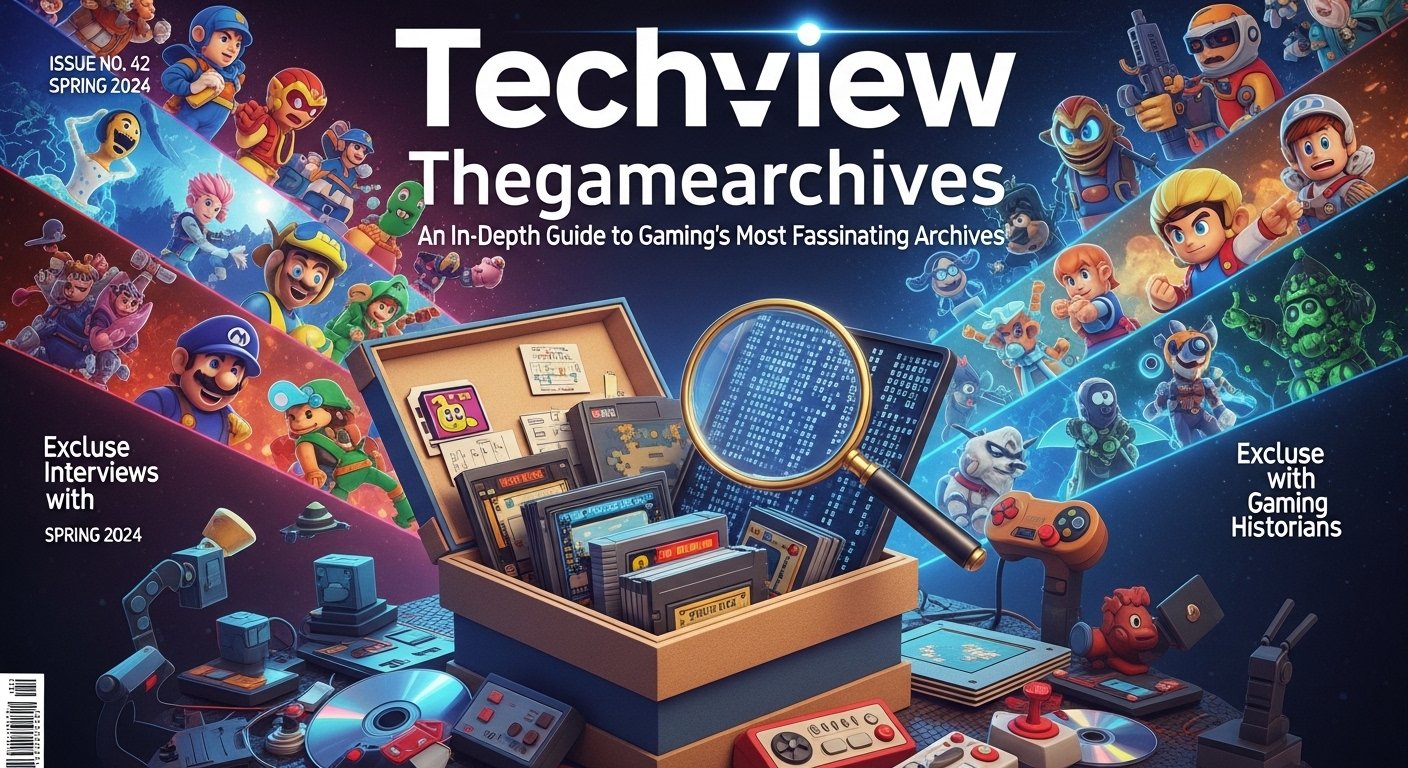
In the dynamic world of digital gaming, archives and repositories that preserve, showcase, and analyze games are becoming more essential than ever. One standout name that has garnered both curiosity and respect among gaming enthusiasts is techview thegamearchives. This comprehensive guide dives deep into what techview thegamearchives represents, how it functions, why it matters in the broader tech and gaming landscape, and how players, developers, and historians can explore its rich offerings.
As gaming becomes increasingly complex, with countless titles spanning decades, having a structured, insightful, and engaging catalog is a must. Techview thegamearchives steps in as a hub that merges thoughtful commentary with archival precision. Whether you are a veteran gamer, a developer looking for inspiration, or a tech historian tracing the evolution of interactive entertainment, this guide unlocks the doors to understanding the role and potential of techview thegamearchives.
In this article, we explore its features, benefits, influence on the gaming ecosystem, comparisons with similar platforms, and future prospects. We also include real-world quotes from industry experts and thoughtful commentary that brings the subject to life. By the end of this immersive read, you will have a complete picture of how techview thegamearchives fits into the modern gaming narrative and why it deserves attention from anyone serious about the craft and culture of games.
Understanding techview thegamearchives: The Basics
When encountering the term techview thegamearchives, it helps to break it down into its core components. At its heart, this is more than a static repository; it’s a curated space combining technology analysis, historical context, gameplay breakdowns, and archival resources for games across genres and eras.
This dual focus on technology and archival depth offers a layered experience. Casual gamers might be drawn to the accessibility and fascinating trivia, while scholars or developers might appreciate the technical dissections and contextual framing of significant works. The enterprise is positioned as an intersection of gaming culture and technological history, making it an invaluable resource in a field that often prioritizes novelty over reflection.
Techview thegamearchives excels in presenting games not just as products but as cultural artifacts. With insightful essays, gameplay clips, historical timelines, and commentary from industry veterans, it turns the act of exploring games into a rich, informative journey.
Unlike simple game lists or databases that focus primarily on metadata (release dates, platforms, genres), techview thegamearchives places heavy emphasis on interpretation. This makes it a platform that feels alive with context, perspective, and a genuine passion for gaming’s development over time.
Starlin Wright: A Deep Look Into the Life, Career, and Growing Influence
In understanding its foundational goals, it’s clear that techview thegamearchives aims to do more than catalog. It seeks to educate, inspire, and preserve.
The Evolution of Gaming Archives and Why techview thegamearchives Matters
Gaming archives have existed in various forms since the early days of personal computing. Enthusiasts would collect floppy disks, document code, scribble notes on design, or discuss gameplay mechanics on bulletin boards. As technology progressed, these grassroots efforts evolved into more structured repositories.
Techview thegamearchives represents a modern evolution of this archival impulse. Rather than being purely community-driven without structure, it combines expert curation and research methodologies. This aligns it with academic archives in other media fields, such as film or literature, while retaining its gaming-centric soul.
The shift toward professional archival practices in gaming reflects a broader recognition that games are culturally and historically significant. Many titles have influenced art, storytelling, design philosophy, and even social interaction. Platforms that preserve these legacies help future generations understand how gaming shaped—and was shaped by—technology and society.
Moreover, techview thegamearchives stands out because it doesn’t merely store information; it interprets it. Users are treated to commentary that explores a game’s technical achievements, design philosophy, cultural resonance, and even its flaws. This depth makes the platform more than a passive database—it’s a living reference that fosters learning and appreciation.
“Games are artifacts of culture, just like books and films,” says Dr. Leila Montrose, a game studies professor. “Platforms like techview thegamearchives validate gaming as a medium worthy of study, preservation, and reflective discussion.”
The result is a resource that honors gaming’s past while informing its future.
Exploring the Core Features of techview thegamearchives
Techview thegamearchives offers a suite of features designed to make exploration intuitive, informative, and engaging. Each feature contributes to a holistic experience that blends technology analysis with archival depth.
Game Profiles and Historical Summaries
At the foundation of techview thegamearchives are detailed game profiles. These aren’t just lists of release dates and platforms; they are narrative-rich entries that contextualize a game’s place in history. Profiles include:
- Technical specifications
- Development context
- Cultural impact
- Design philosophy breakdowns
By offering this level of detail, the platform invites users to see games as more than playthings—they become expressions of innovation and cultural commentaries.
Technology and Mechanics Analysis
An essential part of techview thegamearchives is its analytical lens. It goes beyond surface-level descriptions by exploring:
- Engine innovations
- Mechanics that influenced other titles
- Design decisions and their ramifications
- Behind-the-scenes developer insights
This makes the platform especially valuable to current developers and students of game design.
Archival Collections and Timelines
Chronological timelines help users trace the evolution of specific genres, platforms, or technological breakthroughs. These collections showcase patterns—how innovations built on one another over time—and provide immersive context for significant shifts in gaming development.
Community Insights and Expert Commentary
Techview thegamearchives embraces community contributions and expert commentaries. Engaging write-ups from seasoned developers, historians, and critics bring diverse viewpoints to each entry. This blend of voices enriches the narrative and invites users to see games through multiple lenses.
The following table highlights some of the core features of techview thegamearchives and how they serve different types of users:
| Feature Category | Description | Best For |
|---|---|---|
| Game Profiles | In-depth historical and technical entries | Historians & enthusiasts |
| Technology Analysis | Technical breakdown of engines and mechanics | Developers & designers |
| Timelines and Collections | Chronological grouping of related games or trends | Researchers & educators |
| Community & Expert Commentary | Insights and perspectives from diverse voices | All users seeking depth |
| Cross-Platform References | Connections between titles across systems and eras | Comparative analysis fans |
This structure serves to clarify how each component contributes to the platform’s rich tapestry.
The Interface and User Experience in techview thegamearchives
A resource can have exceptional content, but without thoughtful interface design, users may struggle to engage with it. Techview thegamearchives pays close attention to usability, creating a space that is both visually appealing and functionally intuitive.
The homepage greets users with a clean layout that highlights trending archives, recent additions, and suggested paths of exploration. Navigation menus are logically organized by era, genre, platform, and technical focus. This allows users to tailor their experience based on interest—whether they’re curious about early console evolution or the latest innovations in 3D rendering.
The search function is another critical component. By supporting natural language queries, keyword hints, and filtering options, users can pinpoint exactly what they’re looking for in seconds. This makes deep exploration surprisingly accessible, even for those unfamiliar with technical jargon.
Visual elements also play a significant role. Screenshots, concept art, and archival images provide context and enhance the narrative feel of each entry. Many profiles include embedded clips of gameplay or developer interviews to further enrich the experience.
Ultimately, the interface supports the platform’s mission: to make gaming history comprehensible, engaging, and memorable.
The Role of techview thegamearchives in Gaming Education
As academic interest in gaming continues to rise, educational institutions increasingly turn to curated resources for classroom support. Techview thegamearchives offers materials that educators can use to explore game design, cultural history, narrative structure, and technological evolution.
Unlike generic textbooks or fragmented online sources, this platform provides cohesive thematic threads. Teachers can pull curated timelines to demonstrate how certain mechanics evolved over time, or assign analysis pieces to prompt discussion on narrative technique.
For students, the resource serves as a bridge between practice and theory. Instead of simply playing games, learners can explore why certain design decisions were made and how technological constraints shaped the outcome. This deepens appreciation and develops analytical skills that are transferable to other creative and technical fields.
Gaming education today is multifaceted; it encompasses storytelling, art, programming, psychology, and cultural studies. Techview thegamearchives reflects this interdisciplinary nature, making it an indispensable resource for comprehensive learning.
Community and Collaboration: The Human Element
A remarkable strength of techview thegamearchives is its embrace of community contributions. Enthusiasts, scholars, and industry veterans contribute essays, insights, and even original archival materials. This fosters a sense of shared ownership and diverse perspectives.
Collaboration is structured to maintain quality while promoting inclusion. Expert submissions go through editorial review, ensuring that entries meet the platform’s standards for accuracy and depth. At the same time, user forums and commentary sections allow lively discussion and peer feedback.
This communal aspect makes the platform feel less like a static repository and more like a living, breathing community hub—where knowledge is shared, challenged, and expanded.
How techview thegamearchives Compares with Other Game Databases
It’s useful to compare techview thegamearchives with other well-known game databases to appreciate its unique value proposition. While many repositories focus on metadata (release dates, ratings, platform lists), techview thegamearchives emphasizes interpretive depth.
Where other databases may provide quick reference information, this platform dives into narrative context, technical analysis, and historical impact. It aligns more closely with academic resources while remaining accessible to everyday gamers.
In essence, techview thegamearchives occupies a niche between mass-appeal catalog sites and scholarly journals. It balances factual content with reflective commentary, making it rich and rewarding for users who want more than just surface-level information.
Real Voices on the Importance of Archiving Games
Gaming culture has matured to the point where preservation is not just desirable—it’s essential. Leading voices in the field recognize this.
“Games are living history. If we lose them, we lose cultural memory.” — Marcus Chen, Game Historian
“Studying design evolution teaches us how to innovate responsibly.” — Alicia Torres, Lead Designer
These perspectives underscore why resources like techview thegamearchives matter. They preserve not just the games themselves but the conversations around them that give them meaning.
Practical Tips for Using techview thegamearchives
For those diving into techview thegamearchives for the first time, a few practical tips can enhance your experience:
- Start with thematic timelines to build a foundational understanding.
- Use search filters to explore specific mechanics or eras.
- Read expert commentaries to gain diverse perspectives.
- Contribute your insights through community features.
These practices unlock deeper layers within the archive and make your exploration more rewarding.
The Future of techview thegamearchives and Digital Preservation
Looking ahead, the role of techview thegamearchives in digital preservation will likely expand. As virtual reality, augmented reality, and cloud gaming evolve, archival frameworks must adapt. This platform is positioned to grow alongside these innovations, integrating new formats, interactive exhibits, and advanced analytical tools.
In embracing future technologies, techview thegamearchives will continue to serve as both a mirror of gaming’s past and a map to its future.
Conclusion
Techview thegamearchives stands as a testament to the value of thoughtful preservation, rigorous analysis, and engaging storytelling in the world of gaming. Through its rich profiles, insightful commentary, and commitment to community, it offers a resource that resonates with casual gamers, educators, developers, and historians alike.
More than a database, it is a narrative space where games are understood as cultural milestones, technical achievements, and artistic expressions. In celebrating gaming’s past and illuminating its future, techview thegamearchives invites us all to see games not merely as entertainment, but as meaningful artifacts of human creativity and technological progress.
Frequently Asked Questions
What exactly is techview thegamearchives and who is it for?
Techview thegamearchives is a curated archival platform that documents video games with historical context, technological analysis, and expert insights. It serves gamers, developers, educators, and anyone interested in understanding gaming beyond surface-level metadata. The platform combines narrative depth with interactive exploration, making it valuable for both casual and scholarly use.
How does techview thegamearchives differ from other gaming databases?
Unlike standard game lists that focus on release dates, platforms, and ratings, techview thegamearchives emphasizes interpretive content, historical timelines, and technical breakdowns. This creates a richer understanding of each game’s significance and its place in the broader evolution of the industry.
Can anyone contribute to techview thegamearchives?
Yes, techview thegamearchives values community contributions. Enthusiasts, researchers, and industry professionals can submit essays, insights, and archival materials. Submissions typically undergo editorial review to maintain quality. This collaborative environment ensures a diversity of perspectives while upholding informational integrity.
Why is the preservation of games in platforms like techview thegamearchives important?
Games are cultural artifacts that reflect technological progress, artistic trends, and social values. Preserving them helps retain cultural memory, enables research into design evolution, and supports education about interactive media. Without dedicated archives like techview thegamearchives, much of this history could be lost.
What types of resources can users find on techview thegamearchives?
Users can explore detailed game profiles, timelines, expert analyses, community insights, technical breakdowns, and visual media. These resources provide both factual information and interpretive commentary, making the platform a comprehensive hub for deeper understanding of gaming history.