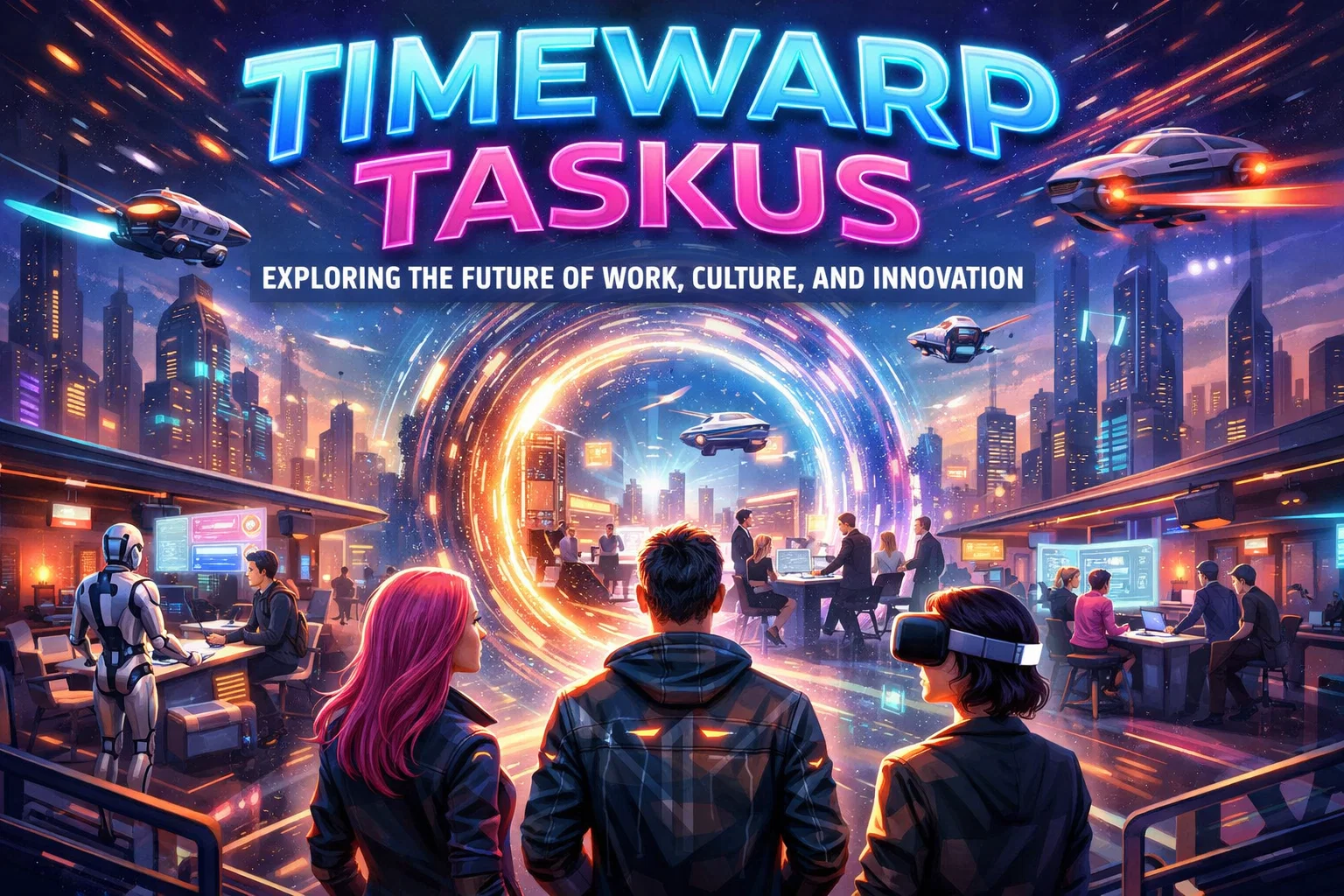
In today’s rapidly evolving world, few concepts capture the imagination quite like Timewarp Taskus. This phrase represents more than just a catchy title—it symbolizes how organizations leap ahead, embrace transformative technology, and build resilient teams that thrive through change. As the business landscape accelerates, Timewarp Taskus highlights a fresh perspective on agility, culture, strategy, and meaningful impact.
This in‑depth guide dives into the heart of Timewarp Taskus, blending insights on company culture, emerging trends, leadership, employee experience, and the tools that make future‑ready work possible. Whether you’re a leader shaping tomorrow’s workforce, a professional navigating career evolution, or a strategist designing organizational transformation, this article provides an authoritative yet engaging view of how Timewarp Taskus reshapes the future of work.
The Origins and Meaning Behind Timewarp Taskus
Understanding the origins of Timewarp Taskus requires us to look beyond surface interpretation and focus on how the concept emerged.
Many people assume Timewarp Taskus refers to a futuristic company or a coined product name. In reality, it encapsulates a mindset—a combination of forward‑thinking, adaptability under pressure, and the ability to evolve at the pace of innovation. The term blends a sense of “time travel” with real‑world task execution, signaling a shift from traditional work models to something more dynamic and future aligned.
At its core, Timewarp Taskus encourages businesses and individuals to rethink assumptions. Rather than reacting to market changes, organizations that embrace this concept anticipate them. Instead of siloed departments, teams are interconnected and empowered. In essence, Timewarp Taskus represents a shift from static processes to fluid, adaptable systems.
To fully grasp its impact, we must trace how contemporary organizations have integrated elements of innovation, culture, and strategy to maintain a competitive edge. Timewarp Taskus is not a trend; it’s a blueprint for navigating tomorrow.
How Timewarp Taskus Redefines Work Culture
Culture is the backbone of any organization, and Timewarp Taskus places immense emphasis on people first.
Traditionally, corporate culture centered around hierarchical structures and rigid procedures. Today, organizations embracing Timewarp Taskus promote autonomy, collaboration, and psychological safety. Employees aren’t just resources; they’re valued contributors to a collective vision.
When teams feel trusted and empowered, creativity flourishes. Timewarp Taskus culture prioritizes diversity of thought, open communication, and continuous learning. Employees are encouraged to experiment, share ideas, and take calculated risks without fear of failure. This type of environment breeds innovation because it aligns purpose with passion—key ingredients for sustainable growth.
Moreover, Timewarp Taskus highlights the importance of purpose‑driven work. People want meaningful contributions; they seek organizations that stand for something beyond revenue. When mission and values align with employee aspirations, engagement increases, turnover decreases, and performance soars. This cultural alignment is critical in the modern workplace.
Importantly, Timewarp Taskus culture isn’t built overnight. It evolves through deliberate leadership choices, consistent communication of values, and a commitment to employee well‑being. Organizations that adopt these principles often see higher morale, increased productivity, and stronger employer brands.
Pearlyn Goh Kun Shan: A Deep Dive into the Life, Legacy, and Influence
Innovation at Speed: The Heartbeat of Timewarp Taskus
If culture is the foundation, innovation is the engine that drives Timewarp Taskus forward.
Innovation in this context goes beyond technology—it includes processes, mindset, design thinking, and problem‑solving frameworks that unlock new possibilities. Timewarp Taskus organizations invest in systems that support constant experimentation and learning.
One of the hallmarks of Timewarp Taskus innovation is iterative improvement. Instead of waiting for perfect solutions, teams roll out minimum viable products (MVPs), gather feedback, and refine rapidly. This cycle of build‑measure‑learn accelerates progress and reduces risk.
Technology plays a catalytic role. Automation, analytics, cloud computing, and emerging tools such as advanced AI systems enhance speed and accuracy. However, Timewarp Taskus balances technological power with human creativity, ensuring that machines augment human potential rather than replace it.
Innovation also requires psychological safety. Teams must feel comfortable challenging the status quo and exploring unconventional ideas. Timewarp Taskus organizations foster environments where questioning norms is encouraged and diverse perspectives are valued.
Eva Marcille Twin Sister: The Truth About the Rumors and What Fans Should Really Know
Furthermore, cross‑functional collaboration is a cornerstone of innovation. Silos are broken down in favor of communication bridges. When experts from different domains come together, new insights emerge—fueling creative solutions that might not have surfaced in isolation.
Leadership Lessons from Timewarp Taskus
Leaders shape culture, set strategic direction, and inspire teams to achieve ambitious goals. In the context of Timewarp Taskus, leadership takes on a dynamic, empathetic, and visionary form.
First, Timewarp Taskus leaders prioritize people. They understand that individuals thrive in environments where recognition, growth opportunities, and support are genuine priorities. These leaders invest time in mentoring, coaching, and enabling employees to perform at their best.
Secondly, these leaders embrace uncertainty. In a fast‑changing landscape, rigid plans quickly become obsolete. Timewarp Taskus leadership equips teams to pivot with confidence, respond to challenges creatively, and adapt strategies in real time.
A striking quote that encapsulates this mindset comes from management thinker Peter Drucker:
“The greatest danger in times of turbulence is not the turbulence—it is to act with yesterday’s logic.”
This echoes how Timewarp Taskus leaders challenge outdated assumptions and instead cultivate agility and resilience.
Moreover, leaders in this framework are transparent in their communication. They share successes, setbacks, and strategic priorities openly. Transparency fosters trust, aligns teams, and accelerates collective problem‑solving. It also humanizes leadership—strengthening relational bonds throughout the organization.
Timewarp Taskus leaders don’t just direct; they empower. They create environments where autonomy thrives, voices are heard, and growth is a shared journey.
Building Future‑Ready Teams with Timewarp Taskus
The future of work demands new types of teams—ones that are adaptable, interdisciplinary, and resilient. Timewarp Taskus emphasizes team structures that support continuous learning, experimentation, and shared accountability.
Team composition is intentional. Rather than assembling groups based solely on job titles, Timewarp Taskus prioritizes complementary skills and shared purpose. Team members are encouraged to engage, collaborate, and contribute ideas freely.
Skills development is another priority. Continuous learning systems, mentorship programs, and upskilling initiatives are embedded into organizational DNA. Rather than training being a checkbox, it’s a strategic investment in future readiness.
Employee empowerment goes hand in hand with autonomy. Timewarp Taskus teams operate with clear goals, accountability, and freedom to determine execution pathways. This reduces bottlenecks, enhances responsiveness, and instills a sense of ownership.
A high‑performance team is not just defined by productivity; it’s characterized by trust. Trust allows for healthy conflict, constructive feedback, and the resilience to navigate setbacks. Teams that embody these qualities adapt faster and deliver higher quality outcomes.
The Technology Infrastructure of Timewarp Taskus
To enable rapid innovation and collaboration at scale, technology infrastructure must be robust, flexible, and secure.
Cloud platforms are foundational. They support remote access, scalability, and modular integration of tools that teams need every day. In a Timewarp Taskus environment, systems are connected, data flows seamlessly, and teams have real‑time visibility into insights that matter.
Analytics and data intelligence also play a critical role. Decisions powered by data reduce guesswork and enhance precision. Timewarp Taskus organizations invest in dashboards, reporting tools, and analytics platforms that keep pulse on performance, customer behavior, and operational efficiency.
Security isn’t an afterthought—it’s integral. With increased connectivity comes heightened risk. Timewarp Taskus infrastructure layers security protocols into every system, ensuring data protection and compliance without hindering performance.
Connected communication tools and collaboration platforms are essential, especially in hybrid or distributed environments. These systems help teams stay aligned, share knowledge, and maintain momentum regardless of location.
Ultimately, the goal is to build infrastructure that complements human capabilities, reduces friction, and keeps innovation flowing.
Timewarp Taskus and Employee Experience
Employee experience encompasses everything from onboarding to daily workflows, recognition systems, and career development. Timewarp Taskus places employee experience at the center of organizational strategy.
Onboarding is designed to be immersive. New hires are welcomed into a culture of curiosity, equipped with clear expectations, and connected to mentors who guide early growth. Timewarp Taskus onboarding accelerates integration and nurtures confidence.
Workflows are optimized for productivity without burnout. This means balancing structure with flexibility. Employees have access to tools that streamline tasks, reduce repetitive workload, and preserve time for high‑impact contributions.
Recognition systems are intentional and personalized. Rather than generic rewards, Timewarp Taskus organizations recognize contributions that align with values, innovation, and collective success. Recognition amplifies motivation, enhances engagement, and builds a sense of belonging.
Career development is proactive. Employees are not left to navigate pathways on their own—they’re supported with coaching, learning resources, and stretch opportunities that align with evolving skills.
When employee experience is designed with empathy and strategy, organizations benefit from higher retention, improved performance, and a reputation as an employer of choice.
Competitive Advantage Through Timewarp Taskus
Staying competitive in a dynamic market requires more than product innovation—it demands organizational dexterity.
Timewarp Taskus creates a competitive advantage by aligning culture, technology, and strategy around adaptability. Organizations that adopt these principles are not just faster—they’re smarter in how they navigate uncertainty.
Speed of execution becomes a strategic differentiator. When teams can iterate, refine, and execute quickly, they capitalize on market opportunities ahead of competition.
Customer experience improves when teams can respond with empathy and agility. Timewarp Taskus organizations design processes that prioritize user feedback, enhance responsiveness, and deliver solutions aligned with evolving expectations.
Importantly, a purpose‑driven culture resonates externally. Customers increasingly choose brands that demonstrate values, ethical behavior, and commitment to meaningful impact.
Competitive advantage through Timewarp Taskus is not short‑lived—it’s sustained through continuous adaptation, strategic foresight, and human‑centered design.
Real‑World Impact: Business Outcomes from Timewarp Taskus
When organizations embrace Timewarp Taskus principles, measurable outcomes follow. While specifics vary across industries, common themes emerge:
| Outcome Category | Impact Examples |
|---|---|
| Employee Engagement | Higher satisfaction scores, reduced turnover |
| Innovation Velocity | More product releases, faster time to market |
| Customer Satisfaction | Improved NPS, enhanced service quality |
| Operational Efficiency | Reduced waste, streamlined workflows |
| Financial Performance | Revenue growth, improved margins |
These results aren’t hypothetical—they reflect how organizations that align culture, technology, and strategy outperform peers over time.
Common Misconceptions About Timewarp Taskus
Because the phrase sounds futuristic, some assume Timewarp Taskus is purely technology driven. While tools are important, the essence lies in mindset and culture.
Another misconception is that change must be disruptive overnight. True transformation involves incremental steps, continuous learning, and thoughtful leadership. Timewarp Taskus emphasizes sustainable evolution—rooted in human potential.
Lastly, some believe that innovation only happens in large organizations. However, teams of any size can adopt Timewarp Taskus principles by prioritizing adaptability, collaboration, and customer‑centric value.
Quotes That Capture the Spirit of Timewarp Taskus
“Innovation distinguishes between a leader and a follower.” — Steve Jobs
This quote resonates deeply with Timewarp Taskus, reminding us that progress requires courage, vision, and relentless pursuit of better ways to work.
“Culture eats strategy for breakfast.” — Peter Drucker
Timewarp Taskus embeds this truth, recognizing that culture fuels execution and long‑term success.
These insights reflect the ethos of organizations that refuse to remain tethered to old paradigms.
Measuring Success with Timewarp Taskus
Success metrics for Timewarp Taskus extend beyond quarterly revenue. Organizations adopt a balanced approach:
- Employee indicators: engagement, retention, internal mobility
- Innovation indicators: cycle time, number of experiments, adoption rates
- Customer outcomes: satisfaction, loyalty, product usage data
- Operational measures: turnaround time, process efficiency
A well‑rounded scorecard enables leaders to track progress, celebrate wins, and course‑correct as needed.
Future Trends Aligned with Timewarp Taskus
The future of work continues to evolve, and Timewarp Taskus remains at the forefront. Emerging trends include:
- Hybrid and flexible work acceleration
- Adaptive learning systems
- Human‑centered automation
- Personalization at scale
- Cross‑industry partnerships
These trends reflect how organizations prioritize human potential while harnessing technology for purpose‑driven growth.
Conclusion
Timewarp Taskus represents a bold reimagining of how organizations operate, innovate, and grow. It’s not just a phrase—it’s a movement toward adaptability, human empowerment, and strategic foresight. By blending culture, technology, leadership, and customer focus, Timewarp Taskus sets a foundation for sustainable success in an ever‑changing world.
Frequently Asked Questions
What exactly is Timewarp Taskus?
Timewarp Taskus refers to a holistic approach that integrates future‑ready culture, agile innovation, empowered teams, and adaptive strategy to help organizations stay ahead of change and deliver sustained value.
How does Timewarp Taskus improve workplace culture?
Timewarp Taskus improves workplace culture by prioritizing autonomy, collaboration, psychological safety, and purpose‑driven work, creating environments where creative problem‑solving and engagement thrive.
Can small businesses implement Timewarp Taskus principles?
Yes, small businesses can implement Timewarp Taskus by focusing on adaptability, cross‑functional collaboration, iterative improvement, and employee development without the need for massive infrastructure.
What role does technology play in Timewarp Taskus?
Technology in Timewarp Taskus enhances communication, data intelligence, automation, and collaboration, but it always serves to amplify human creativity and strategic impact rather than replace it.
How can leaders adopt Timewarp Taskus in their organizations?
Leaders can adopt Timewarp Taskus by modeling agile thinking, encouraging experimentation, fostering psychological safety, aligning teams around shared purpose, and investing in continuous learning and innovation.